How to Choose the Best Food Safety Kits for Your Needs?
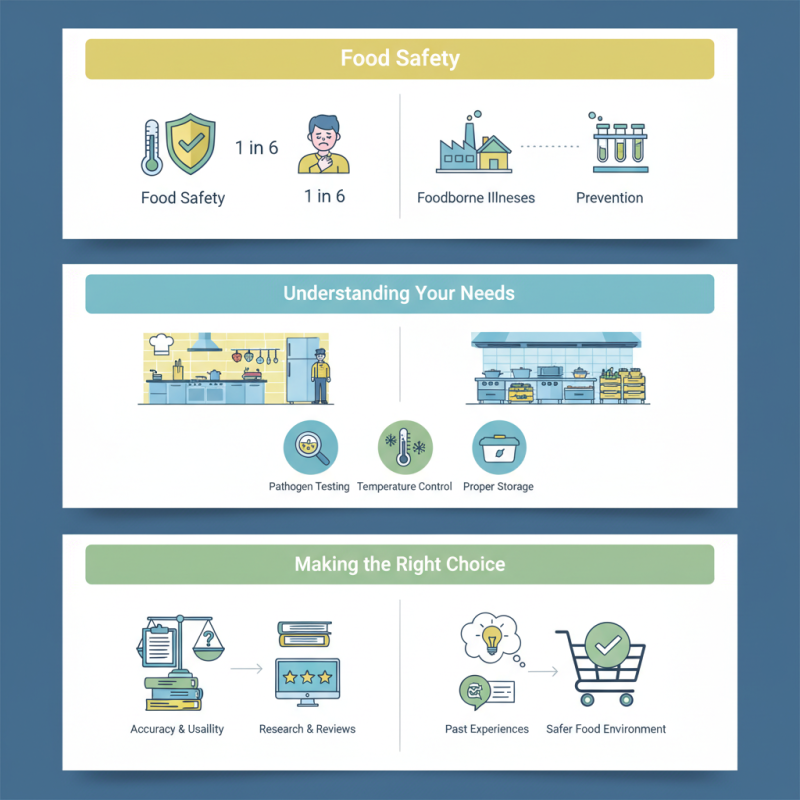
Food safety is a pressing concern in today's world. According to the U.S. Centers for Disease Control and Prevention (CDC), 1 in 6 Americans experiences foodborne illnesses annually. This statistic emphasizes the critical need for effective food safety measures. Food Safety Kits are essential tools in preventing these illnesses. They help individuals and businesses monitor and control food safety risks.
Choosing the right Food Safety Kits involves understanding specific needs. A variety of kits cater to different environments, from home kitchens to commercial settings. For instance, the FDA recommends using testing kits for pathogens, temperature control devices, and proper storage solutions. Each of these components plays a role in maintaining safety.
However, not all kits are equal. Some fall short on accuracy or usability. Users may find it challenging to differentiate between reliable products and less effective ones. It is important to invest time in research and consider user reviews. Reflecting on past experiences can guide better choices in selecting the right Food Safety Kits. The goal is to ensure a safer food environment for everyone.
Understanding Food Safety Kits and Their Importance
Food safety kits play a crucial role in ensuring the safety of the food we consume. They typically include essential tools like thermometers, pH meters, and sanitizer tests. These items help identify potentially harmful bacteria and contaminants. With the rise of foodborne illnesses, the significance of these kits cannot be overstated. They serve as a line of defense against food spoilage, ensuring that meals remain safe for families.
When choosing a kit, it's vital to assess your specific needs. Consider the types of food you prepare most often. If you handle raw meats, a kit that includes meat thermometers is necessary. For those who prepare canned goods, pH meters are critical for safe preservation. However, many overlook expiration dates on monitoring devices. Regularly checking these can prevent false readings.
It can be overwhelming to navigate the variety of kits available. Not all of them provide comprehensive tools or instructions. Some users may find themselves unprepared during critical moments. The effectiveness of a kit largely depends on how well you understand its components. Investing time in learning about food safety practices enhances the value of any kit. This will ensure that you are not just buying products, but are actively safeguarding your health.
Types of Food Safety Kits Available on the Market
When selecting food safety kits, various options are available. These kits often cater to specific needs. For instance, some focus on microbial testing. Others may emphasize chemical safety. It's essential to evaluate what your main concerns are. Microbial kits test for harmful bacteria. Chemical kits check for contaminants. Understanding these differences helps in making an informed choice.
Aside from basic testing kits, there are also comprehensive packages. These might include tools for training staff and protocols for food handling. Some kits even provide software for tracking results. It's interesting that many people overlook the importance of training. A kit alone cannot ensure food safety without proper handling education.
Cost varies significantly among options. A more expensive kit doesn't always guarantee better results. Some budget kits perform adequately. However, you might wonder about their reliability. Therefore, it’s wise to read reviews and gather user experiences. Don’t rush this decision. A thoughtful choice can make a significant difference in maintaining safety standards.
Food Safety Kits Comparison
Key Features to Look for in Food Safety Kits
Choosing the right food safety kit is crucial for ensuring a safe kitchen environment. When looking for a kit, consider essential features. Look for temperature monitoring tools, such as digital thermometers. These help check food temperatures accurately. A good kit also includes sanitizing solutions. They help keep surfaces and utensils clean.
Tips: Always read the instructions. Misuse can lead to safety hazards. Test your thermometer with ice water. This checks its accuracy.
Another important feature is a clear instruction manual. This guide helps users understand proper food handling techniques. Kits should also have color-coded utensils. This minimizes cross-contamination risks. Consider kits that are portable. This allows easy use at picnics or events.
Tips: Check expiration dates on sanitizers. Old products may be ineffective. Always keep your kit stocked. Running out of supplies can lead to unsafe practices.
How to Choose the Best Food Safety Kits for Your Needs? - Key Features to Look for in Food Safety Kits
| Feature | Description | Importance | Example Items |
| Temperature Monitoring | Devices to check if food is stored at the right temperature. | Prevents bacterial growth and maintains food quality. | Thermometers, Data loggers |
| Hygiene Supplies | Tools for maintaining sanitary conditions in food handling. | Essential for preventing contamination. | Hand sanitizers, Disposable gloves |
| Testing Kits | Kits designed to test food for harmful pathogens. | Ensures food safety by detecting contaminants. | Test strips, Microbial test kits |
| Storage Solutions | Containers and bags that prevent spoilage. | Helps keep food fresh and reduces waste. | Vacuum sealers, Airtight containers |
| Training Materials | Resources for educating staff about food safety. | Critical for ensuring everyone follows safety protocols. | Guidelines, Booklets, Online courses |
Assessing Your Specific Needs for Food Safety
When choosing food safety kits, understanding your specific needs is crucial. The FDA reports that foodborne illnesses affect 1 in 6 Americans each year. This statistic highlights the importance of having the right tools for prevention. Assessing your environment is the first step. If you work in a restaurant, you need comprehensive kits that include item sanitizers and thermometers. In a home kitchen, a basic kit might suffice.
Consider the types of food you prepare. Raw meats require extra precautions, which means you should invest in color-coded cutting boards and food thermometers. Reports indicate that proper thermal monitoring can reduce bacterial growth significantly. It's essential to regularly evaluate your food safety practices. For example, do you often neglect cleaning surfaces after preparing raw foods? Identifying these gaps can help you choose better kits.
Not all kits are created equal. Some may include unnecessary items or lack crucial tools. Reflect on your daily food handling. Are you using outdated methods? Modern food safety kits can include digital tools for real-time monitoring of food temperatures, which can streamline your kitchen processes. The right kit can improve efficiency and reduce waste during food prep.
Budget Considerations When Selecting Food Safety Kits
When selecting food safety kits, budget considerations play a crucial role. Many individuals and businesses often overlook the importance of investing in quality kits. A report by the Food and Drug Administration (FDA) indicates that unsafe food handling leads to about 48 million illnesses in the U.S. annually. A well-equipped food safety kit could potentially prevent several of these cases, making it a valuable investment.
The price of food safety kits can vary widely. Basic kits often cost less but may lack essential components. Advanced kits might include temperature probes and sanitation supplies, priced higher. According to the USDA, businesses that invest in comprehensive food safety training and resources can reduce foodborne illness incidents by 35%. This statistic illustrates the importance of not solely focusing on the upfront cost but considering the long-term benefits.
It's also vital to reflect on what your specific needs are. A small home kitchen might only require basic testing tools. In contrast, a large restaurant would need more extensive equipment. Balancing your immediate budget with potential long-term savings from avoiding food safety issues is essential. A little extra investment now can save significant costs later, both financially and in terms of reputation.


