What is Gene Synthesis and How Does It Work?
In the rapidly evolving field of biotechnology, Gene Synthesis stands out as a transformative technology. Dr. Emily Carter, a leading expert in synthetic biology, states, "Gene synthesis allows us to create life’s building blocks with precision." This powerful technique enables scientists to design and produce custom DNA sequences, paving the way for groundbreaking research and innovations.
Gene Synthesis involves several complex processes. It includes the assembly of nucleotides, the building blocks of DNA. Researchers can manipulate these sequences to understand genetic functions or develop novel therapies. However, the technology is not without challenges. The accuracy of synthesized genes must be constantly monitored to avoid potential errors.
As we delve deeper into the world of Gene Synthesis, it’s essential to reflect on its implications. While this technology has incredible potential, it raises ethical questions about genetic manipulation. The responsibility lies in how we apply these advancements. Balancing innovation with caution is crucial for a sustainable future in biotechnology.

Understanding Gene Synthesis: An Overview of the Process
Gene synthesis is a fascinating process that involves constructing artificial genes. It allows scientists to design and produce new sequences of DNA with specific functions. The technology has grown rapidly, enabling advances in various fields like medicine and agriculture.
During gene synthesis, oligonucleotides are assembled into longer DNA sequences. This involves several steps, including designing the gene sequence, synthesizing the oligonucleotides, and then assembling them into a complete gene. Each step must be precise, as errors can lead to malfunctioning genes. Researchers often face challenges, such as ensuring compatibility between different DNA segments, which can affect the final product.
Despite its many benefits, gene synthesis raises important questions. The ability to create custom genes can lead to ethical dilemmas. For example, how should we regulate the use of synthetic genes in the environment? This is an area that requires careful thought. As the technology evolves, so must our understanding of its implications. Scientists must navigate these complexities while pushing the boundaries of what is possible in genetics.
Key Techniques Used in Gene Synthesis and Their Applications
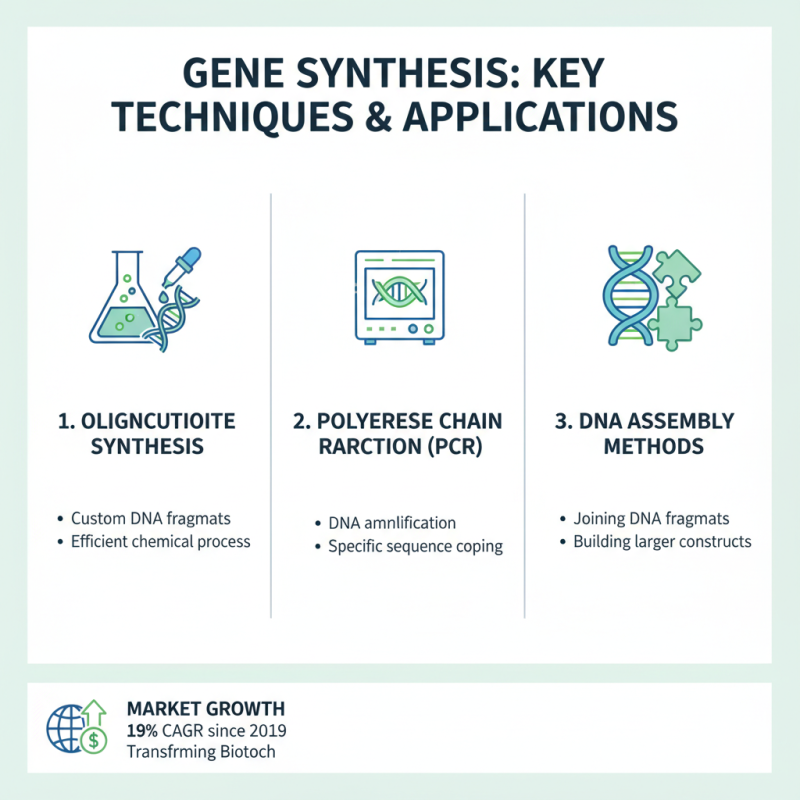
Gene synthesis has transformed molecular biology, enabling scientists to create specific DNA sequences in a controlled manner. Key techniques in this field include oligonucleotide synthesis, polymerase chain reaction (PCR), and assembly methods. Oligonucleotide synthesis allows for custom sequences to be synthesized efficiently. Reports indicate that the global gene synthesis market has been growing at a CAGR of 19% since 2019, underscoring its rising importance in biotechnological applications.
PCR amplifies these synthesized genes, making them available in large quantities. This method has revolutionized genetic research and diagnostics. Additionally, assembly techniques, such as Gibson assembly, allow for the seamless joining of multiple DNA fragments. These approaches enable complex constructs, which are essential for synthetic biology projects. However, challenges remain. Issues like error rates in oligo synthesis and the efficiency of assembly methods can impact results.
Despite these challenges, gene synthesis remains pivotal in developing therapies, vaccines, and agricultural innovations. The potential for enhancing crop resilience or creating personalized medicine is immense. As the technology continues to evolve, researchers must address these imperfections to improve reliability and effectiveness in real-world applications. The future of gene synthesis holds promise, but careful refinement is essential for optimal results.
The Role of DNA Building Blocks in Gene Synthesis
Gene synthesis is a groundbreaking method that involves creating DNA sequences from scratch. Central to this process are DNA building blocks, known as nucleotides. These four simple molecules—adenine, thymine, cytosine, and guanine—combine in various sequences to form genes. Each sequence encodes vital information for building proteins, which are essential for life.
The assembly of these nucleotides is intricate. Scientists carefully select the order of nucleotides based on the desired genetic information. This procedure often includes software tools that predict how sequences will behave inside a cell. However, mistakes can happen during this synthesis process. Nucleotide misinsertions or incorrect sequences might lead to faulty genes. These errors highlight the complexity of gene synthesis and the need for meticulous quality control.
Researchers often face challenges when transferring synthesized genes into living organisms. Not all genes express properly in different cellular environments. Each cell type may interpret the genetic instructions differently. Despite these hurdles, the potential applications of gene synthesis are vast. They range from creating new therapies to enhancing agricultural productivity. Balancing innovation with caution remains essential in this fast-evolving field.
Quality Control Measures in Gene Synthesis Projects
Quality control measures are essential in gene synthesis projects. These protocols ensure that synthesized genes meet desired specifications. The process begins with thorough sequence verification. This often involves techniques such as Sanger sequencing. It checks whether the final product matches the intended DNA sequence.
Contamination is a significant concern. Labs must implement strict protocols to prevent this. Clean environments and regular equipment maintenance reduce risks. Additionally, using certified reagents can enhance reliability. Monitoring synthesis efficiency is also crucial. It helps in identifying any discrepancies during the process.
Another important aspect is functional validation. Simply verifying the sequence is not enough. The synthesized gene must express correctly in a host system. Researchers often conduct expression assays to assess this. However, the approach can introduce variations that need careful interpretation.
Balancing accuracy and efficiency in gene synthesis remains a challenge. Continuous improvement in quality control processes is necessary for progress in this field.
Future Trends and Innovations in Gene Synthesis Technology
Recent advancements in gene synthesis technology are reshaping the landscape of biotechnology. A report by Allied Market Research estimates the global gene synthesis market will reach $5.4 billion by 2027, growing at a CAGR of 21.5% from 2020. Innovations are driving costs down and increasing speed, making synthetic biology more accessible. For instance, improved algorithms and robotic automation are streamlining the synthesis process, boosting efficiency significantly.
The trend towards increased customization is also noteworthy. Researchers are now able to design genes with specific functions tailored to their projects. This capability aids in diverse applications, from therapeutic development to agricultural enhancement. Yet, there are challenges. Ethical considerations around gene editing remain complex, influencing public perception and regulatory approaches. Balancing innovation with responsibility is crucial as the field advances.
Tip: When pursuing gene synthesis projects, take time to evaluate your design specs carefully. A well-defined goal can save resources and time. Monitor industry updates regularly to stay informed about new techniques and tools available for your research. This knowledge can guide your strategic decisions.